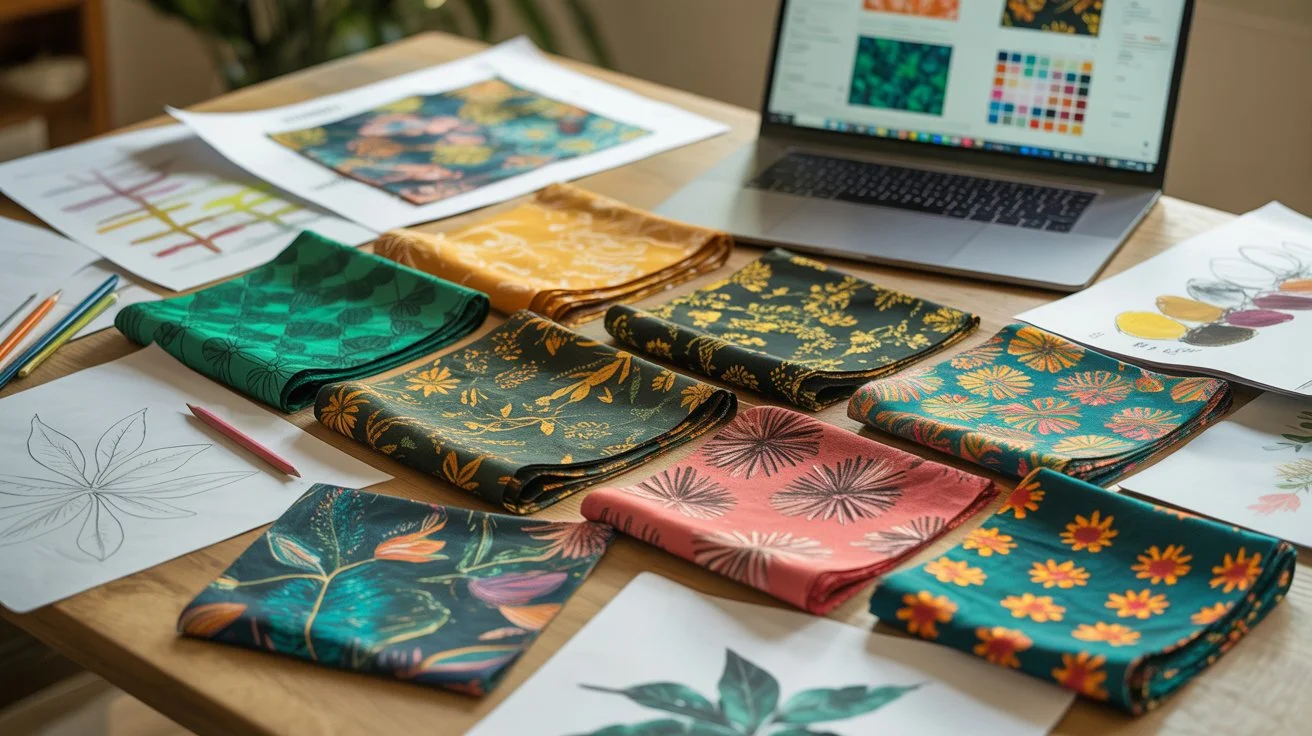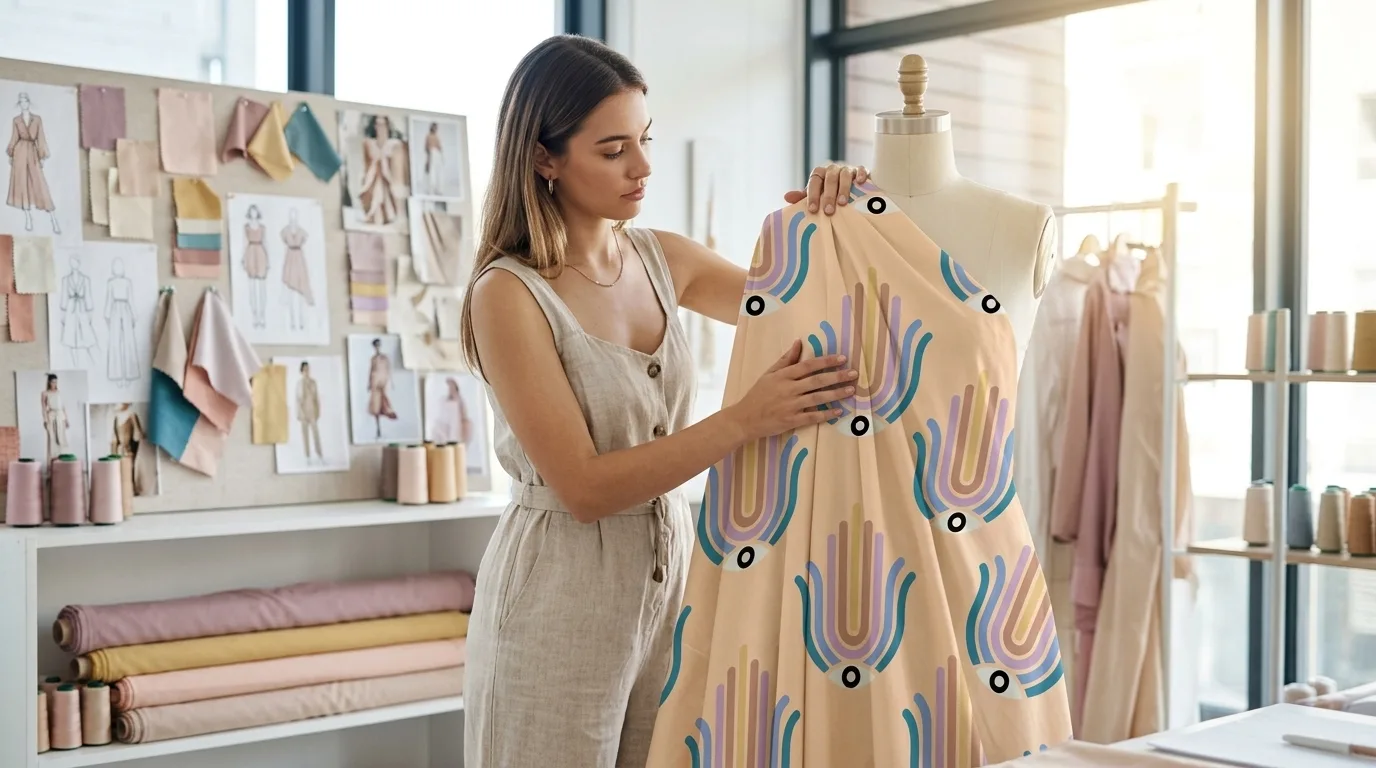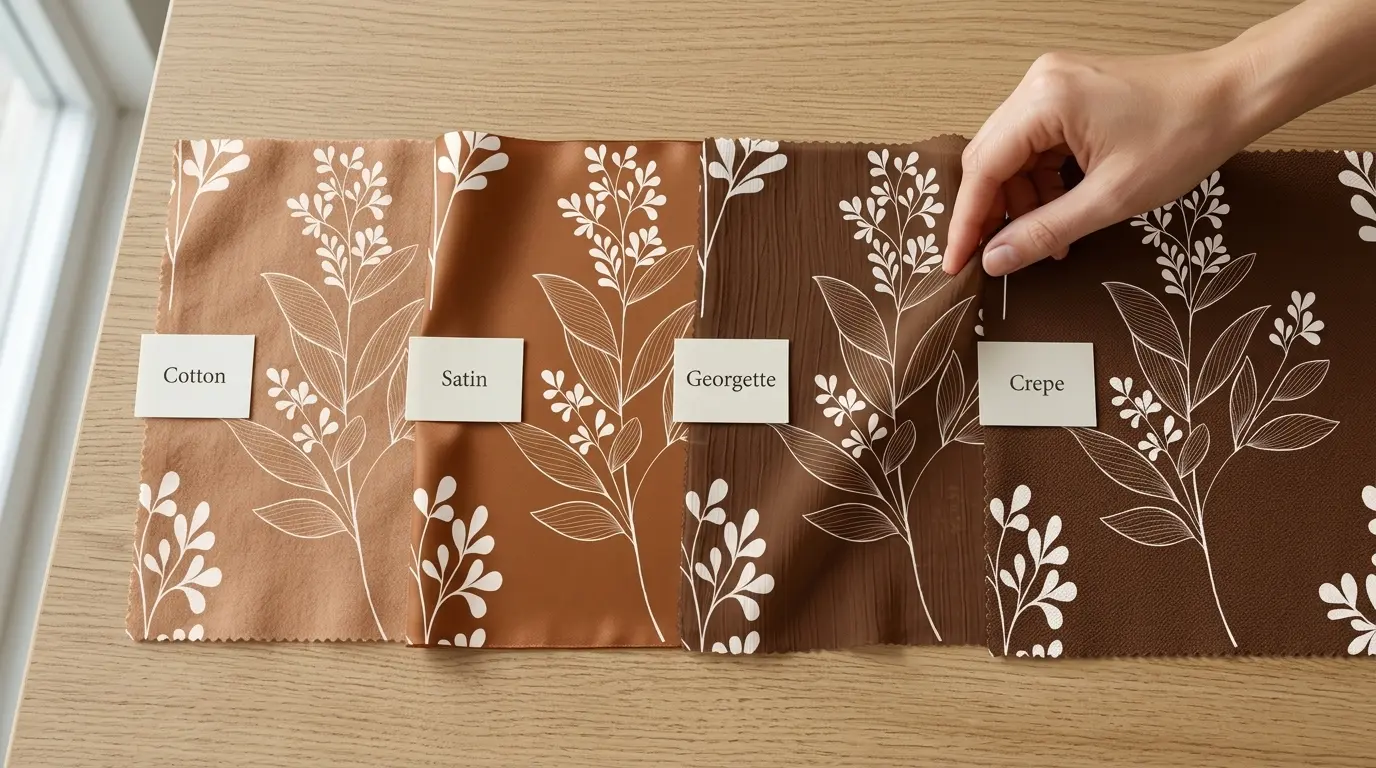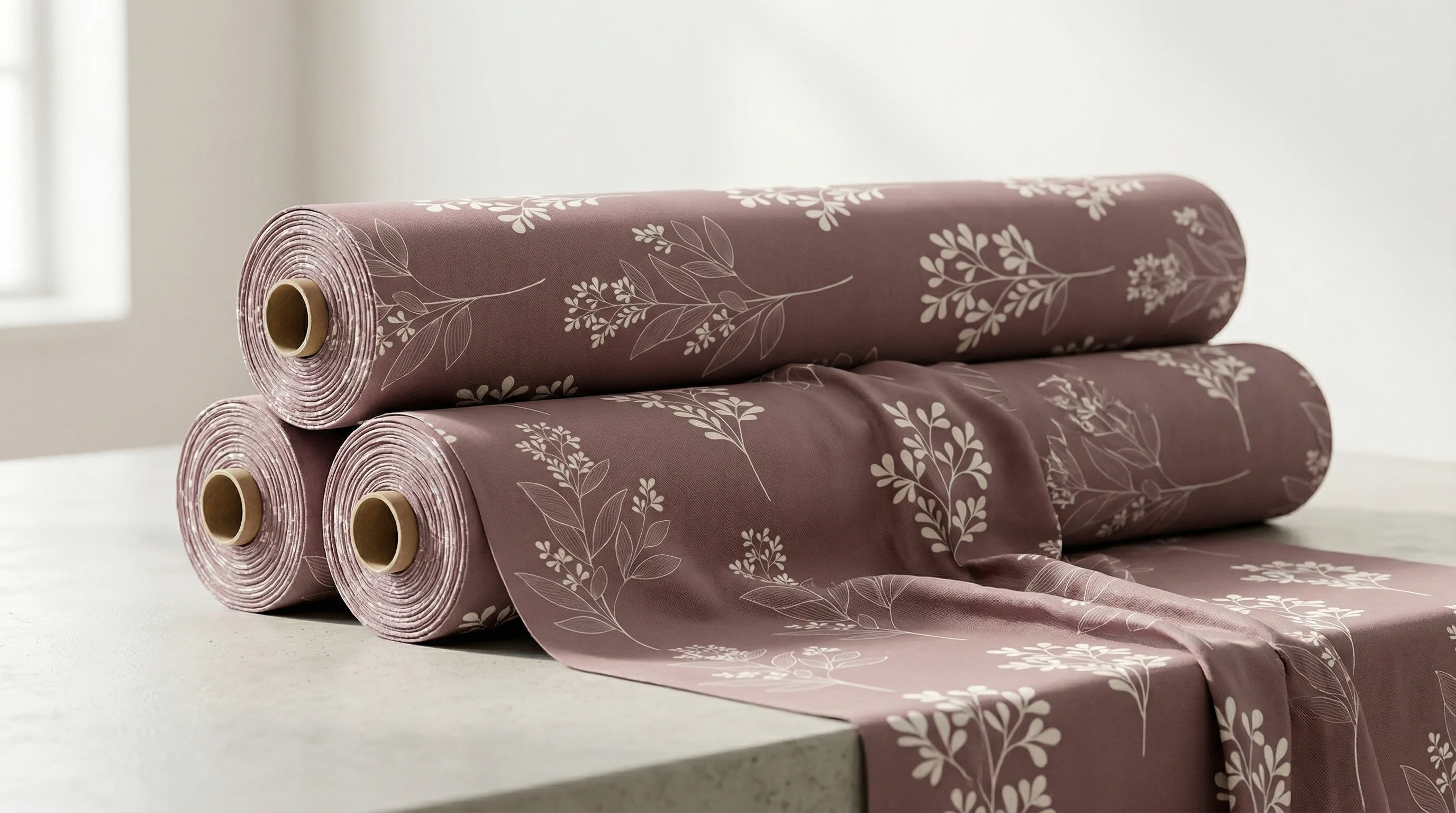

Buying printed fabric in bulk is one of the most consequential sourcing decisions a fashion brand, interior design business, or creative enterprise will make. Get it right, and you have consistent, high-quality material that supports your production schedule and protects your margins. Get it wrong, and you're looking at color inconsistencies, failed quality checks, and capital tied up in fabric you cannot use.
This guide covers everything business buyers need to know before placing a bulk printed fabric order: how to choose the right buying path, how to calculate the quantity you actually need, what to look for in a supplier, and how to evaluate quality before committing to a large run.
Whether you're placing your first bulk order for a new collection or scaling up a growing brand's production, the decisions covered here will help you avoid the most expensive mistakes in wholesale fabric sourcing.
You've finalized your designs. The production timeline is set. Now you need fabric, and you need it in volume.
For small brands and independent businesses, the printed fabric wholesale market can feel overwhelming. Supplier directories list hundreds of options. MOQs (minimum order quantities) vary wildly. And the gap between a supplier's sample quality and what shows up in your bulk delivery is sometimes wide enough to derail an entire production season.
The good news is that the process is manageable once you understand the structure behind it. Whether you're sourcing dressmaking fabrics online or placing a large seasonal production run, this guide breaks down exactly how to buy printed fabric in bulk, from choosing your sourcing path to inspecting your final delivery, so you can make confident decisions for your brand.
The Three Paths to Buying Printed Fabric in Bulk
Most buyers searching for bulk printed fabric assume there's one standard process. In reality, there are three distinct buying paths, and choosing the wrong one wastes both time and money.
- Path 1: Ready-made printed fabric in bulk. Some wholesale printed fabric suppliers stock pre-printed designs and sell them in large quantities. This is the fastest option since there's no production lead time. The tradeoff is limited design choice: you get what they have in stock, not what your brand identity actually needs.
- Path 2: Custom-designed bulk printing. You provide your own artwork, and a supplier prints it as custom print fabric in your chosen quantity. This is the standard path for brands building a recognizable visual identity. Lead times are longer, typically 21-45 days for digital printing, but the result is a completely original fabric specific to your collection.
- Path 3: Print-on-demand wholesale. Some platforms let businesses order custom-printed fabric with lower minimum quantities and ship it directly to you or your manufacturer. This path suits brands in early growth stages who need quality and creative control without the commitment of large industrial production runs, custom-print
Understanding which path fits your current business model is the first decision, before you evaluate a single supplier or compare a single price.
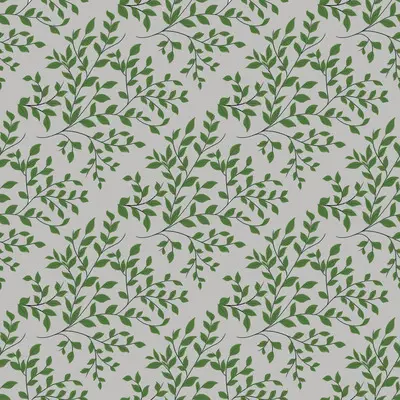
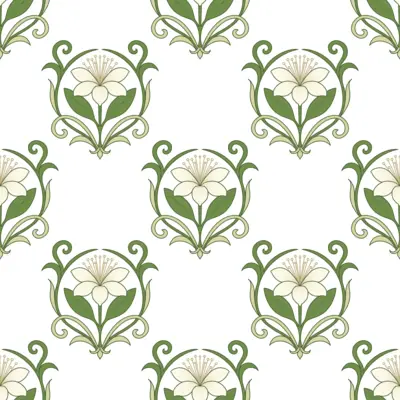
Popular Fabric Design Picks

Understanding Minimum Order Quantities for Printed Fabric
Minimum order quantity (MOQ) is the smallest quantity a supplier will accept for a single print run. It exists because setup costs (calibrating machines, running color approvals, preparing artwork files) are fixed regardless of how much fabric you ultimately print.
MOQs vary significantly depending on the printing method:
- Digital printed fabric: Typically 50-100 meters per design. Setup costs are lower because digital print fabric designs go directly to the printer without physical screen preparation, making this the most accessible entry point for custom bulk orders.
- Flat-bed screen printing: Usually 300-500 meters per colorway. Screen creation is expensive, so suppliers spread that fixed cost across larger runs.
- Rotary screen printing: Often 500-1,000 meters or more. This method is designed for high-volume industrial production and rarely makes sense for independent brands or small businesses.
For most small and mid-sized brands, digital textile printing offers the most practical entry point. You get true custom prints at manageable quantities, with the ability to scale as your demand grows.
One thing experienced buyers know: you can often negotiate MOQs by consolidating your order. If you need three colorways of the same design, ordering all three together may bring the per-colorway MOQ down compared to three separate orders placed independently.
How to Calculate the Right Quantity to Order
One of the most common and costly mistakes brands make is ordering the wrong quantity. Too little and you run short mid-production. Too much and you have dead inventory absorbing cash and storage space.
Here is a practical four-step approach for calculating how many meters to order for a garment production run.
- Step 1: Establish fabric consumption per garment. Your pattern maker can provide a consumption figure in meters. As a rough benchmark, a woman's dress uses approximately 2-2.5 meters of 58-inch-wide fabric. A blouse uses 1.5-2 meters. A pair of trousers uses 1.5-2 meters.
- Step 2: Account for cutting waste. Standard cutting waste in apparel production runs between 10-15% of total fabric consumption. Add this percentage to your base consumption figure before calculating total meters.
- Step 3: Add a buffer for quality rejects. In any bulk run, a percentage of fabric will carry minor printing defects, selvage irregularities, or color variations at the start and end of rolls. Budget an additional 5-8% as a safety buffer.
- Step 4: Calculate your total. Multiply per-garment consumption by your unit count, then apply the waste and buffer percentages on top.
For example: 500 dresses at 2.5 meters each equals 1,250 meters base. Adding 12% cutting waste (150 meters) and 6% buffer (75 meters) brings the total order to approximately 1,475 meters. Getting this calculation right before you contact a supplier protects you from emergency re-orders at full price and prevents costly production delays.
What to Look for in a B2B Fabric Supplier
Not all B2B fabric suppliers are equal, and the shortfalls rarely show up until after you've paid. Here is what experienced buyers evaluate before committing to a bulk fabric order.
Strike-Off and Sample Policy
Any credible supplier will offer a strike-off, a small pre-production sample of your design printed on the actual production fabric, before running the full bulk order. This is not optional. It's the only reliable way to verify that your design, colors, and fabric choice will translate correctly at scale.
Be cautious of suppliers who charge excessive fees for strike-offs, discourage them entirely, or require a non-refundable deposit before you've seen a sample. These are meaningful red flags, not minor inconveniences.
Colorfastness Standards
Printed fabric should maintain its color through washing, rubbing, and light exposure. Ask every supplier what colorfastness grade they guarantee. The industry standard is Grade 4 or higher on the ISO 105 / AATCC scale (Grade 5 means no color change; Grade 1 means severe fading). A supplier who can't give you a clear answer on this metric hasn't tested their output.
Dye Lot Documentation
When you reorder the same design in a subsequent season, the fabric should match your original run precisely. This consistency depends on the supplier maintaining documentation of the exact ink ratios, fabric batch, and machine settings used in your first order.
Ask upfront: how do you document dye lots and manage color consistency across repeat orders? Brands that don't ask this question in advance often discover color drift between seasons when their repeat order doesn't match their original production fabric.
Communication and Lead Time Transparency
Suppliers who give vague lead times ("approximately 3-4 weeks") are protecting themselves, not you. Push for a written production schedule with milestone dates: artwork approval, fabric procurement, print start, quality inspection, and ship date. This is especially important when working with international suppliers across time zones, where each communication exchange can add 12-24 hours to your production cycle.
How Much Does Bulk Printed Fabric Actually Cost?
Per-meter pricing is only part of the cost picture. Business buyers who focus entirely on the headline price often encounter surprises that significantly change the economics of a bulk order.
Here is a realistic breakdown of what you are actually paying for:
- Base fabric price: Wholesale pricing for digitally printed fabric typically ranges from $3-8 per meter, depending on fabric type and design complexity. Cotton cambric fabric and cotton poplin fabric sit at the lower end of the range. Mid-tier fabrics like printed linen fabric, printed crepe fabric, and printed georgette fabric typically run $4-6 per meter. Satin material fabric, printed satin fabric, and printed organza fabric command higher prices due to their weight, sheen, and weave complexity.
- Setup and strike-off fees: Digital printing has lower setup costs than screen printing, but many suppliers charge $30-100 for strike-off samples. This fee is sometimes credited against the bulk order, sometimes not. Ask specifically before you commit.
- Shipping and freight: For international orders, freight costs depend on weight, volume, and method. Air freight is faster but significantly more expensive for heavy bulk fabric. Budget 8-15% of the order value for international shipping from Asia to North America or Europe as a planning figure.
- Import duties and tariffs: Depending on your country and the supplier's country of origin, textile imports attract duty rates ranging from 5% to over 25%. In the United States, Section 301 tariffs apply to fabric imported from China. Check the Harmonized Tariff Schedule for your country before comparing overseas and domestic supplier pricing.
- Third-party quality inspection: Pre-shipment inspection services that verify fabric quality before it leaves the supplier typically cost $200-400 per inspection. For orders above $10,000 in value, this cost is almost always worth it.
When you add these line items together, a fabric that looks $1-2 per meter cheaper from an overseas supplier may cost the same as or more than a domestic option once freight, duties, and inspection are included, with longer lead times and more complex problem resolution on top.
How to Evaluate Quality Before Committing to the Bulk Order
Quality issues in bulk printed fabric fall into three categories: color accuracy, fabric defects, and shrinkage. Each requires a specific evaluation approach before you approve a bulk run.
Color Accuracy
Compare your strike-off against your original digital artwork in natural daylight rather than screen light. Check for color accuracy (does the printed result match your design files?), color bleed (are the design edges sharp or fuzzy?), and print registration (if your design uses multiple layers, are they correctly aligned?).
For washability, test the strike-off yourself: machine wash it 3-5 times and evaluate color retention. A result at Grade 4 or above means minimal to no visible color change, which is the standard minimum for commercial apparel and home textiles.
Fabric Defects
Examine the strike-off for weave irregularities (slubs, knot marks, or streaks in the base fabric), selvage quality (straight, consistent edges matter for production cutting accuracy), and GSM consistency (request the supplier's GSM specification and verify it against what you received).
Shrinkage
Pure cotton fabric typically shrinks 3-5% after the first wash if not pre-treated. According to the Textile Research Journal, shrinkage behavior depends on fiber composition, weave structure, and finishing treatment. If your production relies on precise garment measurements, ask your supplier whether the fabric has been pre-shrunk and request a swatch for independent shrinkage testing before approving the bulk run.
Why Fabzure Works for Businesses Buying Custom Printed Fabric
For brands that need custom printed fabric in consistent volume without the complexity of overseas manufacturing relationships, Fabzure offers a more direct way to buy fabric online than traditional printed fabric wholesale channels. It works as a B2B fabric supplier designed around the way independent brands and growing businesses actually order: smaller quantities, consistent quality, and no minimum order negotiations.
Unlike conventional fabric mills that require thousands of meters per design, Fabzure lets businesses order printed fabric across 13+ premium fabric types at quantities that fit actual production needs. The range covers everything from viscose rayon fabric and poly rayon fabric to natural crepe fabric, printed muslin fabric, and printed organza fabric. You upload your own design, choose your fabric, and receive custom-printed fabric shipped internationally, with consistent digital printing quality and a straightforward ordering process.
The practical advantage for repeat orders is significant. Because Fabzure uses digital printing, your design files produce consistent results each time you reorder. There's no dye lot drift between seasons, no renegotiating with a new production batch, and no color approval process for repeat runs of the same artwork. The how it works page walks through each step if you want to understand the process before placing your first order.
For businesses that want creative options beyond their own artwork, Fabzure's design library includes 15,000+ print-ready designs searchable by style, color, and theme. Bulk orders include custom sizing, dedicated quality inspection, and international shipping to 25+ countries via FedEx, DHL, and UPS.
Ready to Place Your Bulk Fabric Order?
Buying printed fabric in bulk doesn't have to mean navigating complex supplier relationships, large minimum order commitments, or long international lead times. Fabzure makes custom printed fabric accessible for businesses at every scale, from first production runs to full seasonal collections.
Upload your design, select from 13+ premium fabric types, and place your order with shipping to 25+ countries. Start your project at fabzure.com.
Final Thoughts
Buying printed fabric in bulk comes down to two things: confidence and control. Confidence that your supplier will deliver what they promise, and control over the quality, quantity, and true cost of what you receive.
The brands that get bulk fabric sourcing right don't leave these things to chance. They ask the right questions before placing an order, test quality before committing to a full run, and understand their total cost structure before comparing supplier prices. Whether you're placing your first bulk printed fabric order or refining a sourcing process you've used for years, these fundamentals stay constant across every supplier, every method, and every production season.