
Building a fashion brand on your own terms means finding digital printed fabric that matches your creative vision without forcing you into factory-scale commitments. For independent designers and small brands, the challenge has never been talent or ideas. It's been access: getting the right fabric, in the right print, in quantities that actually make sense for a growing business.
This guide covers everything a fashion designer or small brand owner needs to know about sourcing digital printed fabric. You'll learn which fabric types work for different fashion categories and how to evaluate print quality before committing to a full order.
You'll also discover how digital printing has removed the barriers that used to keep small brands locked out, and how to scale your fabric sourcing as your brand grows.
Whether you're launching your first capsule collection, building an Etsy shop around original prints, or transitioning from local fabric stores to custom digital printed fabric for a growing label, this is the sourcing guide that treats you like a serious business, not an afterthought.
You have a vision for your brand. Maybe it's bold geometric prints on structured cotton for a streetwear line. Maybe it's soft botanical patterns on flowing georgette for a resort collection. You know exactly what you want the final garment to look like. But when you start looking for fabric, reality hits.
The local fabric store doesn't carry anything close to what you need. Online wholesale suppliers want minimum orders of 500 meters. The few platforms that accept small orders don't offer the fabric types that match your designs.
You spend weeks searching, emailing suppliers, requesting swatches that never arrive, and slowly realizing that the fashion industry's supply chain wasn't built for someone like you.
This is the gap that stops talented designers from launching. Not a lack of skill or creativity, but a sourcing system that treats small brands as too small to bother with.
Popular Fabric Design Picks
The good news is that digital printed fabric for small fashion brands is more accessible now than at any point in the industry's history. Digital printing technology and on-demand platforms have rewritten the rules. This guide shows you exactly how to take advantage of that shift.
Why Small Fashion Brands Struggle to Source Digital Printed Fabric
The traditional fabric supply chain works on a simple principle: volume equals access. Mills print fabric in bulk runs because that's how they keep costs low.
Fabric agents broker deals between factories and brands, but they focus on clients ordering thousands of meters per season. Fabric stores carry pre-printed inventory, but the selection is limited to what sells in high volume.
For a small brand ordering 20 to 100 meters, this system has almost nothing to offer. You're too small for a mill relationship, too specific for what stores stock, and too custom for generic online marketplaces.
The result is a frustrating cycle of compromise: settling for fabric that's close enough, designs that are almost right, and quantities that don't quite fit your production plan.
According to Precedence Research, the global digital textile printing market is projected to reach USD 14.13 billion by 2035, growing at 13.77% annually. That growth is being driven largely by small and independent brands that need custom prints without bulk commitments. The industry is shifting toward you. The question is whether you know how to navigate it.
The Hidden Cost of Settling for "Close Enough" Fabric
When designers can't find the exact fabric they need, they make substitutions. They pick a similar print in a different color. They choose a fabric type that's available even though it's not ideal for the garment. They adjust their design to fit what the supplier has in stock.
Each compromise seems small on its own. But compounded across an entire collection, they erode brand identity.
A resort wear brand that uses stiff cotton because flowing georgette wasn't available in the right print loses the visual signature that makes customers recognize their work. A designer who wanted a bold abstract print but settled for a generic floral ends up with a collection that looks like every other small brand at the market.
The real cost isn't just the fabric. It's the distance between what you imagined and what you delivered.
What to Look for When Buying Fabric for Your Clothing Brand
Sourcing fabric for independent designers involves a different set of priorities than buying fabric for large-scale manufacturing. You're not just evaluating price per meter. You're evaluating whether a supplier can deliver what a small, design-driven brand actually needs.
Print Quality and Color Accuracy
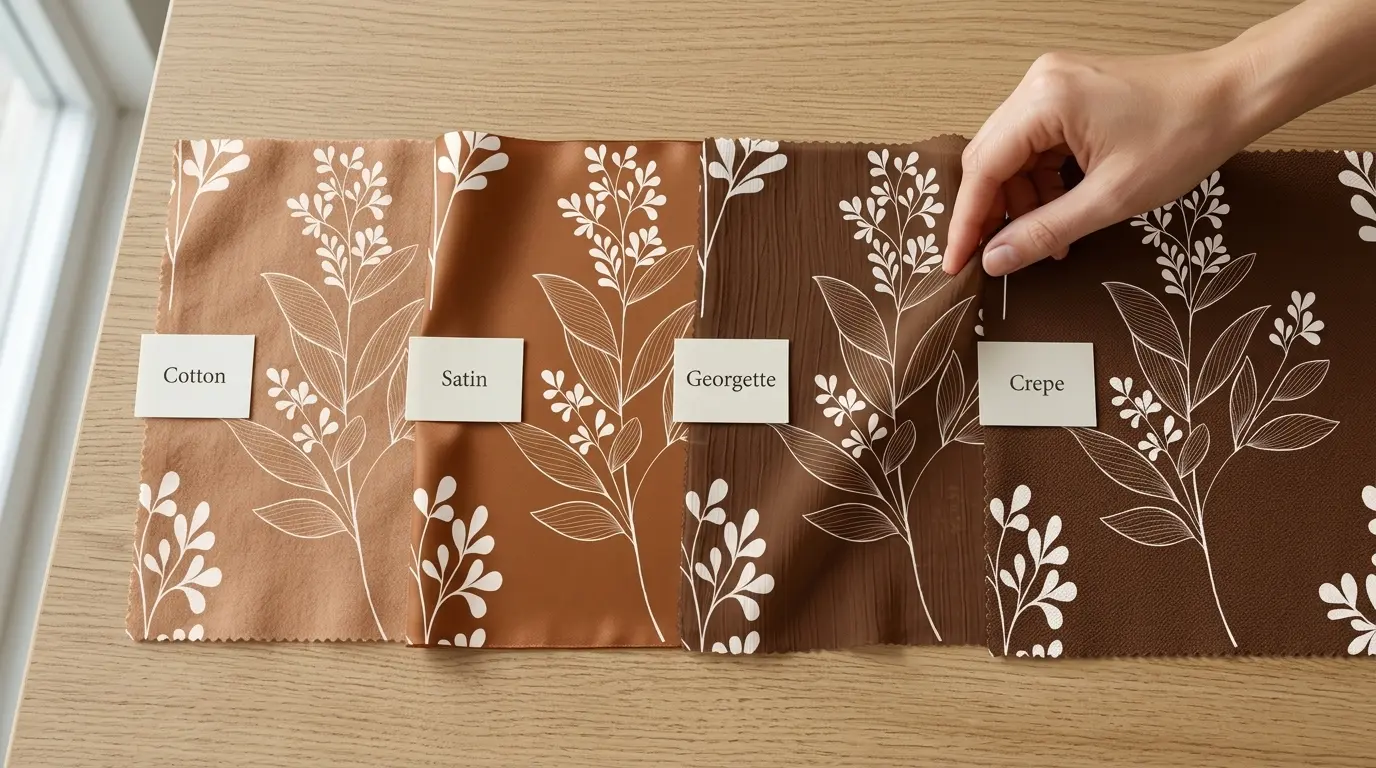
This is where most first-time buyers get surprised. The same design file can look dramatically different depending on the printing method, the fabric type, and the printer's color management process. A floral pattern that looks vibrant on screen might appear washed out on Cotton Cambric, or the warm reds might shift toward orange on Poly Muslin.
Before committing to a production run, always order a sample or swatch. Print your actual design, not a generic test pattern, on the actual fabric you plan to use. Compare the digital printed fabric under natural daylight, not studio lighting, and check how the colors look when the fabric is draped and gathered, not just flat on a table.
If the supplier doesn't offer single-piece sampling, that's a red flag for small brand sourcing. The ability to test before committing is what separates platforms built for independent designers from those designed for bulk buyers.
Fabric Type and End Use
Choosing the right fabric is half the design decision. A stunning print on the wrong fabric produces a garment that doesn't drape correctly, doesn't breathe the way the customer expects, or doesn't hold up after washing. If you're designing for specific garment categories, your fabric choice should start with the end use, not the print.
The key principle is matching fabric properties to what the garment needs to do. Lightweight, breathable fabrics for summer wear. Lustrous, smooth fabrics for evening pieces. Structured, durable fabrics for tailored garments and home decor.
We cover the specific fabric-to-category pairings later in this guide. You can also explore our complete fabric selection guide for a deeper breakdown of all 13 fabric types.
Minimum Order Quantities
This is the single biggest barrier for small brands. Traditional fabric mills set minimum order quantities (MOQs) at 500 to 3,000 meters per design because their equipment needs long print runs to be cost-effective.
For a small brand producing 50 units of a dress style, needing just 30 meters of fabric, those minimums make no sense.
Digital printing platforms have changed this fundamentally. Because digital printers don't require screens, plates, or setup runs, they can print a single design on a single meter of fabric at the same quality as a thousand-meter run.
This means you can order exactly what you need: 5 meters for sampling, 30 meters for a small production run, or 200 meters as your brand grows.
Popular Fabric Design Picks
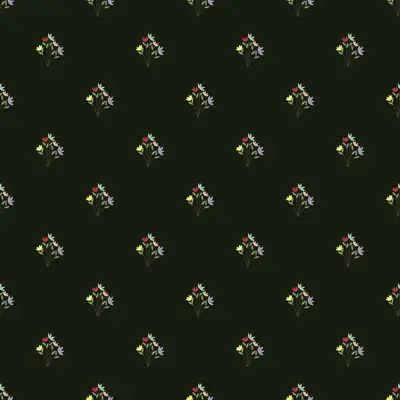
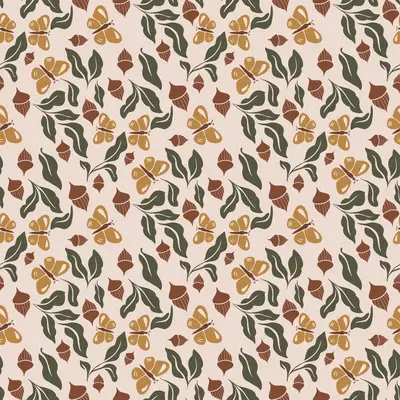
Explore these designs that match what fashion designers and small brands look for:
- Contemporary Collection - Bold, trend-forward patterns that help small fashion brands create standout pieces for modern collections
- Hand Drawn Florals Collection - Artisan-feel botanical prints that give independent labels a handcrafted, original aesthetic
- Modern Designs Collection - Clean, sophisticated patterns suited for everything from streetwear to minimalist fashion lines
How Digital Printing Changed Everything for Independent Designers
Understanding what custom fabric printing is and how it works matters because it explains why the old barriers no longer apply. Traditional screen printing requires a separate screen for every color in the design.
A seven-color floral pattern needs seven screens, each costing hundreds of dollars to produce. Those setup costs only make financial sense when spread across thousands of meters.
Digital textile printing eliminates all of that. An industrial inkjet printer reads your design file and prints it directly onto fabric in a single pass, with virtually unlimited colors and no per-color setup cost.
This one change transformed the economics of custom fabric production and opened the door for small brands to order digital printed fabric on their own terms.
What This Means for Your Brand
The practical impact goes beyond just being able to order small quantities. Digital printing enables creative freedom that screen printing never could.
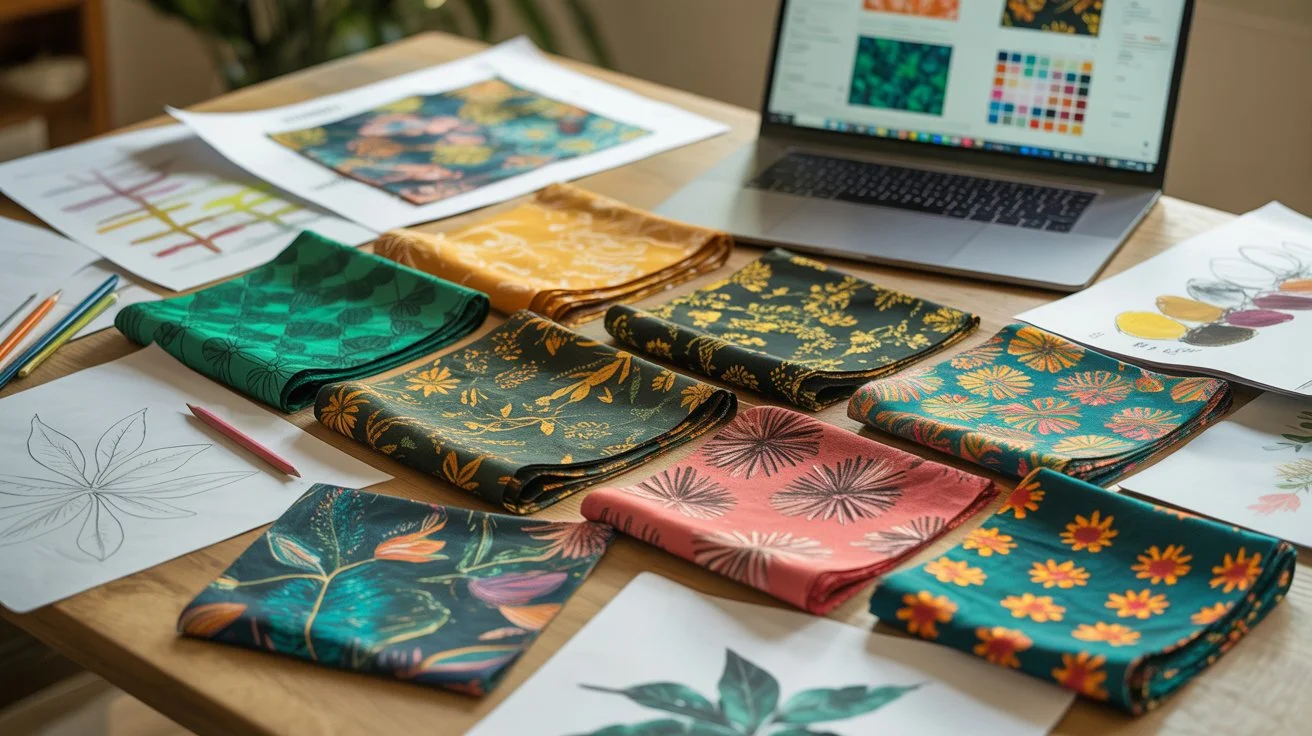
You can print photographic images, intricate watercolor effects, and complex color gradients that would require dozens of screens in traditional printing. You can change your design between orders without any retooling cost. And you can test new prints with a small sample run before committing to a larger order.
For small fashion brands, this means you can iterate faster. Instead of guessing which prints will sell and committing to bulk orders before you have any market feedback, you can produce small batches, test them with customers, and reorder the ones that perform well.
This print-test-scale approach dramatically reduces the financial risk of launching new designs.
The Sustainability Advantage
There's another benefit that matters increasingly to both designers and their customers. Digital printing uses up to 95% less water than traditional textile printing methods, according to industry data from Kornit Digital.
It also produces significantly less waste because there's no ink left over from unused screens, and no overproduction from needing to meet high minimums.
For brands that market sustainability as part of their identity, digital print fabric isn't just more accessible. It's more aligned with the values their customers care about.
Being able to tell your customers that your fabric was printed on demand, with minimal water waste and zero overproduction, is a genuine brand differentiator.
Matching Fabric Types to Fashion Categories
Choosing the right fabric for your fashion category isn't guesswork when you understand what each fabric type does well. Here's a practical framework for matching fabric properties to fashion product categories.
Casual and Everyday Wear
Comfortable, breathable fabrics that take prints well and survive regular washing. Cotton Cambric is the workhorse here: lightweight, natural fiber, crisp print reproduction, and easy to sew.
Poly Rayon adds a softer drape while keeping the garment easy to care for. Both work well for t-shirt dresses, casual tops, summer coordinates, and loungewear.
For a detailed breakdown of the best fabrics for summer dresses, we've covered that in a dedicated guide.
Evening and Occasion Wear
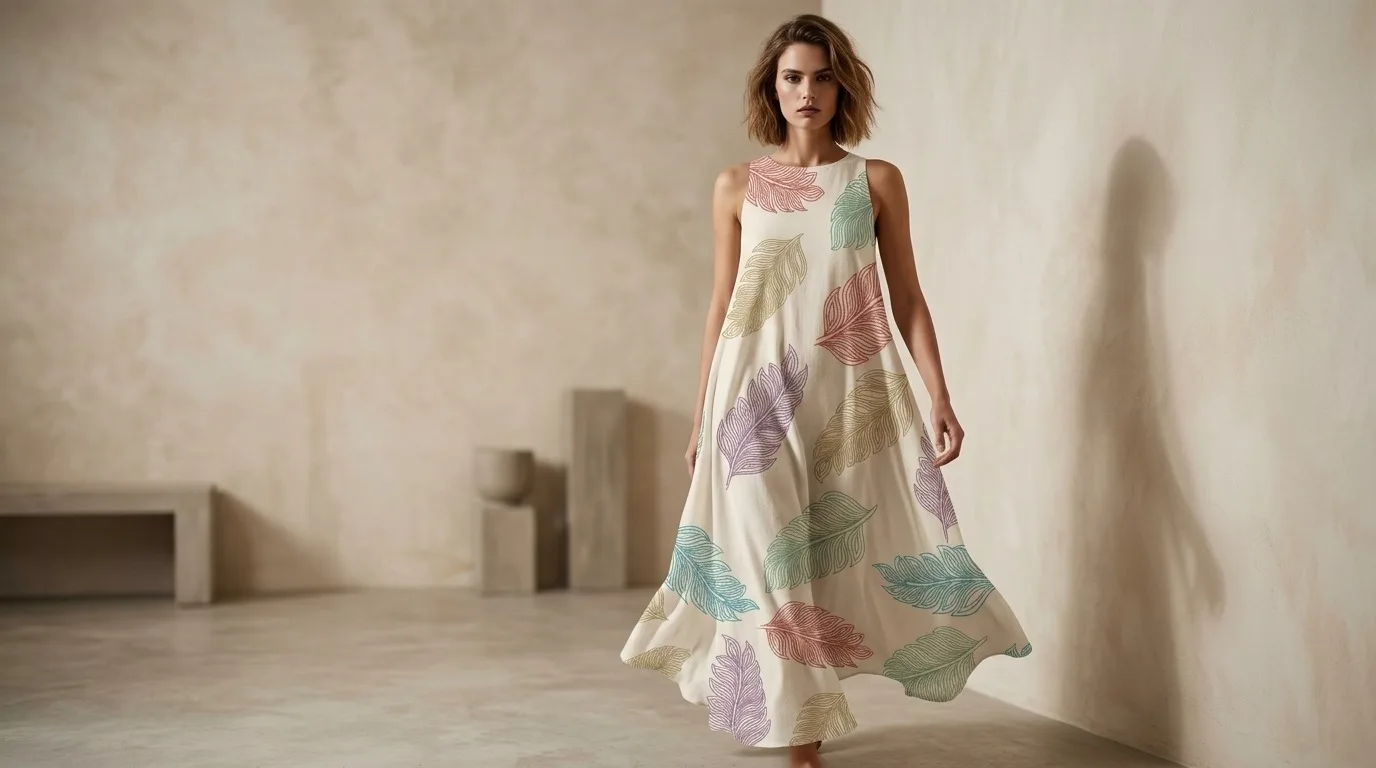
Fabrics that catch light, drape elegantly, and communicate luxury. Bemberg Satin, Japan Satin, and Modal Satin deliver that smooth, lustrous finish that elevates printed designs into something you'd see on a runway. Viscose Organza works beautifully for layered looks and sheer overlays.
Ethnic and Festive Wear
Traditional silhouettes demand fabrics with rich texture and graceful drape. Natural Crepe and American Crape provide the body and movement that suits kurtas, sarees, and festive garments.
Viscose Rayon is a versatile choice for flowing ethnic wear with vibrant print reproduction. Explore traditional print designs that complement these fabric choices.
Accessories and Home Decor Extensions
Many small fashion brands expand into accessories and home decor using the same prints from their clothing lines. For scarves and stoles, Weightless Georgette offers beautiful color saturation with a premium hand feel.
For cushion covers, tote bags, and small structured items, Poplin and Poly Linen provide the durability and body these products need. This is a smart way to extend your brand without developing entirely new designs.
From Sample to Collection: Scaling Your Fabric Orders
One of the biggest advantages of buying digital print fabric online is the ability to scale gradually instead of making an all-or-nothing commitment. Here's a practical scaling path that many successful small brands follow.
Stage 1: Design Validation (1 to 10 Meters)
Start by ordering small quantities of your key prints on different fabric types. This stage is about answering questions, not fulfilling orders.
Does the print translate well from screen to fabric? Does the fabric drape the way you need for the garment style? How do the colors hold after washing?
Order a few meters and make your test garments before committing further. Read our guide on why digital printed fabric colors fade to understand what to check during this stage.
Stage 2: Small Production Run (20 to 100 Meters)
Once you've validated your prints and fabric choices, order enough for a small production run. For a capsule collection of 10 to 20 garments, you might need 30 to 60 meters depending on the styles.
At this stage, you should be confident in the fabric-design combination and ready to cut and sew production pieces.
Stage 3: Growth Orders (100 to 500+ Meters)
As your brand gains traction and you have repeat styles or bestselling prints, you can increase order sizes. Many digital print platforms offer better per-meter pricing at higher volumes.
At this stage, you're operating with market data, not guesses. You know which prints sell, which fabrics your customers prefer, and how much fabric each production cycle requires.
This gradual approach eliminates the risk that sinks most small fashion businesses: overinvesting in inventory before you know what sells. Every meter of fabric you order should be backed by either a confirmed order or strong market evidence.
Protecting Your Original Designs
For fashion designers who create original prints, intellectual property protection is often overlooked until something goes wrong. Your print designs are creative works, and they deserve the same protection as any other intellectual property.
Copyright Basics for Fabric Prints
In most jurisdictions, original artwork (including textile and surface pattern designs) is automatically protected by copyright the moment you create it. You don't need to register to own the copyright.
However, registering your designs with your country's copyright office strengthens your legal position significantly if someone copies your work. In the United States, registration through the U.S. Copyright Office allows you to pursue statutory damages, which makes enforcement practical for small brands.
Practical Protection Steps
Before sending design files to any printing platform, keep high-resolution originals in your own storage. Document your design process with dated files, sketches, and notes that prove you created the work.
If you're new to the upload process, our guide on where to upload your design to print on fabric walks through the steps.
When sharing previews with potential buyers or on social media, use lower resolution images that can't be easily reproduced for printing.
Read the terms of service of any platform you upload to. Reputable platforms like Fabzure don't claim ownership of designs you upload, but not every service is transparent about this. Understanding what rights you retain is part of protecting your brand.
Why Fabzure Works for Fashion Designers and Small Brands
The challenges this guide describes, finding quality digitally printed fabric without impossible minimums, getting your own designs onto the right fabric, scaling from samples to production runs, are exactly the problems Fabzure was built to solve.
Fabzure gives independent designers and small brands access to 13+ premium fabric types, from lightweight Cotton Cambric for summer collections to luxurious Bemberg Satin for evening wear.
You can upload your own designs and see them previewed on your chosen fabric before ordering, or browse curated design collections if you need print-ready patterns.
What makes Fabzure particularly valuable for small brands is the flexibility. There are no prohibitive minimum order quantities, so you can start with sample lengths and scale up as your business grows.
Orders ship to 25+ countries through FedEx, DHL, and UPS, which means your location doesn't limit your fabric access. And because every order is digitally printed on demand, you get consistent quality whether you're ordering 5 meters or 500.
Ready to Start Building Your Fabric Collection?
If you've been waiting for the right moment to move from off-the-shelf fabric to custom prints that define your brand, this is it. The technology, the platforms, and the pricing have all reached a point where small brands can access the same quality of digitally printed fabric that used to be reserved for established fashion houses.
Start by uploading one of your designs to Fabzure, choosing a fabric type that suits your first garment style, and ordering a sample length.
See how your vision looks and feels on real fabric. That first sample is where every successful collection begins.
Final Thoughts
The fashion brands that build lasting identities are the ones that control their creative vision all the way through, from design concept to the fabric it's printed on.
Finding the right digital printed fabric for small fashion brands used to mean navigating a system built for someone else. That's no longer true. Digital printing has changed the equation, and the designers who understand how to use it gain a real competitive edge.
Your designs deserve to exist on fabric that matches your standards. Start with a sample, refine your choices, and build from there. Explore Fabzure's fabric library to find the right fabric for your next project, and start designing on your terms.